
Tracking 33 Alumni Startups, ₹18,279 Cr in Value & 2,897 Jobs Created.
Over the last decade, Urban Company has evolved far beyond a home-services marketplace. While the company scaled across cities and categories, it was quietly building something even more powerful, an operator-to-founder ecosystem.
Today, the Urban Company alumni network represents:
- 33 startups founded
- 82 founders
- ₹18,279.21 Cr combined valuation (as of Jan 2026)
- 2,897 jobs created
- Presence across 20+ sectors
This is the story of how operational excellence transformed into entrepreneurial momentum — and how Urban Company became one of India’s most diversified founder factories.
Alumni Startups: Who Built What?
Urban Company alumni have built companies across healthcare, EV infrastructure, fintech, consumer brands, SaaS, and community platforms.
Notable Breakout Startups
- Pristyn Care – Tech-enabled healthcare delivery platform
- Battery Smart – EV battery swapping infrastructure network
- Aramya – Direct-to-consumer lifestyle brand
- Kutumb – Vernacular social community platform
Insight: Sector Diversification Signals Strong Operator DNA
Unlike typical SaaS-heavy alumni networks, Urban Company founders are building in:
- Asset-heavy businesses (healthcare, EV infra)
- Consumer brands (D2C)
- Fintech & SaaS
- Community & social platforms
This level of diversification suggests deep operational exposure, not just product thinking. Alumni understood supply chains, trust layers, pricing dynamics, and unit economics at scale.
Educational Backbone: Where Did the Founders Study?
Out of 82 founders, elite institutions are strongly represented.
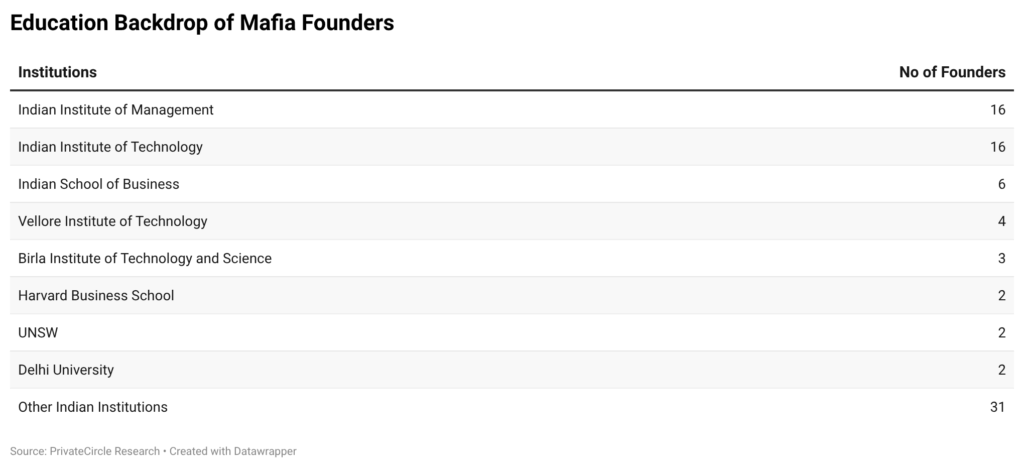
Insight: Talent Density Compounds Over Time
Urban Company didn’t just hire top-tier talent; it created an environment where this talent thrived and matured. Exposure to hyper-growth, marketplace complexity, and city-level operations sharpened founders before they stepped out.
Elite institutions may have provided the foundation. Urban Company provided the battlefield.
Founding Timeline: When Did the Wave Begin?
Startup formation accelerated meaningfully post-2020.
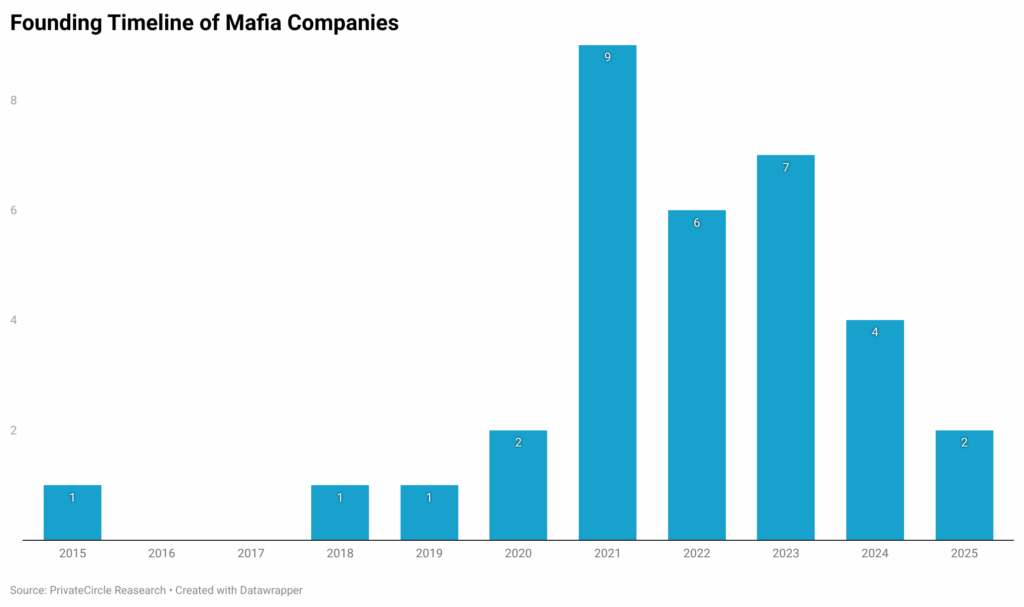
Observed Pattern:
- 2021: Breakout founding year
- 2023: Second surge
- 2024–26: Continued momentum
This aligns with:
- Post-COVID digital acceleration
- Peak funding cycle (2021–22)
- Mature operators ready for “Act 2.”
Insight: Timing + Readiness = Founder Acceleration
The alumni wave wasn’t random. It was a convergence of:
- Capital availability
- Market digitization
- Experienced operators seeking ownership
Urban Company effectively became a launchpad at the exact right macro moment
Sectoral Spread: Not a One-Sector Ecosystem
Urban Company alumni are building across 21+ sectors.
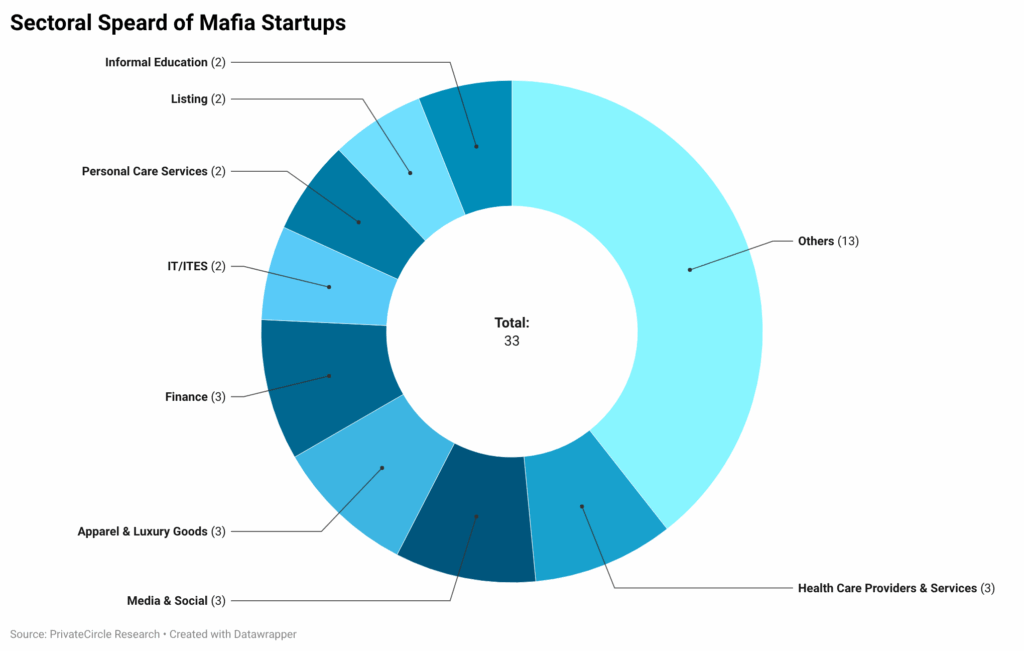
Insight: Marketplace Exposure Creates Pattern Recognition
Marketplace businesses require mastery across:
- Supply acquisition
- Demand generation
- Trust & quality control
- Pricing optimization
- Unit economics
This cross-functional intensity produces founders who are comfortable in both digital and physical-world execution.
Valuation Landscape: Power Law in Action
The combined alumni valuation stands at ₹18,279 Cr.
However:
- A handful of breakout leaders account for a large portion of total value.
- The long tail contributes meaningful innovation and employment.
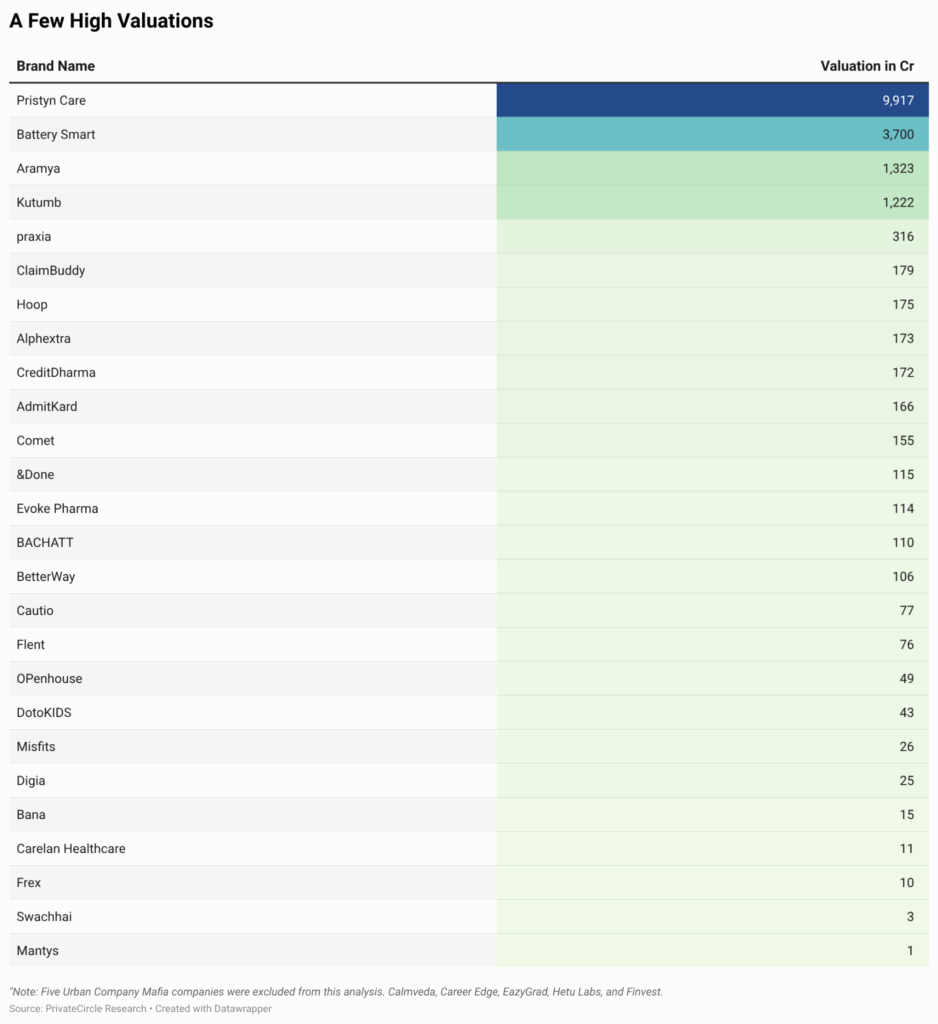
Insight: Concentration Is Normal, Ecosystem Breadth Is What Matters
Every founder ecosystem follows a power law. The key metric isn’t equal valuation distribution, it’s sustained founder formation and sectoral diversity.
Urban Company scores highly on both.
Employment Impact: 2,897 Jobs Created
Alumni startups have collectively generated 2,897 direct jobs.
This reflects:
- Venture-backed scaleups
- Infra-heavy companies
- Consumer-facing operations
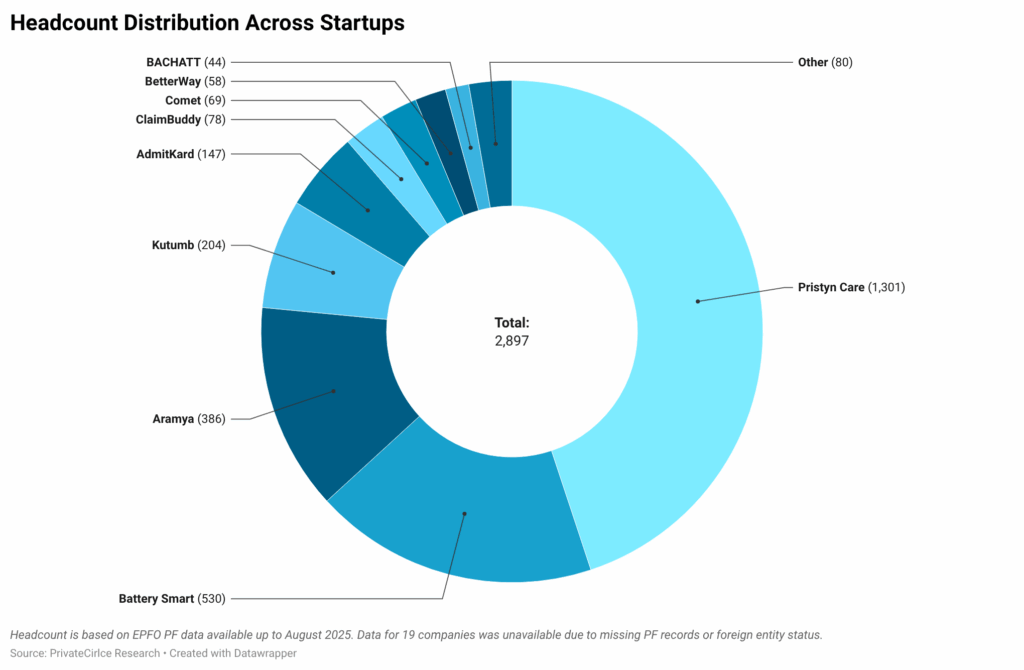
Insight: Operator-Led Founders Build Real Teams
Because these founders come from operational backgrounds, they prioritize structured hiring, process design, and execution rigor early.
That translates into faster job creation and scalable team-building.
What Makes Urban Company a Founder Factory?
Urban Company alumni carry forward:
- Marketplace unit economics discipline
- City-level operational intensity
- Supply-side network building expertise
- Consumer trust & service standardization playbooks
- Structured process orientation
When they start up, they don’t begin from zero. They begin with pattern recognition.
Conclusion: The Urban Company Alumni Footprint
Urban Company’s alumni footprint today includes:
- 33 startups
- 82 founders
- ₹18,279 Cr enterprise value
- 2,897 jobs
- 21+ sectors represented
Value and employment remain concentrated among breakout leaders. Yet the true signal lies in breadth, consistency, and momentum.
Urban Company may have started as a services marketplace. Today, it functions as a talent flywheel powering India’s next generation of foundersAnd if the current trajectory continues, the Urban Company founder ecosystem could become one of the most diversified operator-to-entrepreneur pipelines in India’s startup landscape.
PrivateCircle is a privacy-first social platform by Urban Company alumni, enabling secure, meaningful connections while capitalizing on the rising demand for safe digital interactions.