
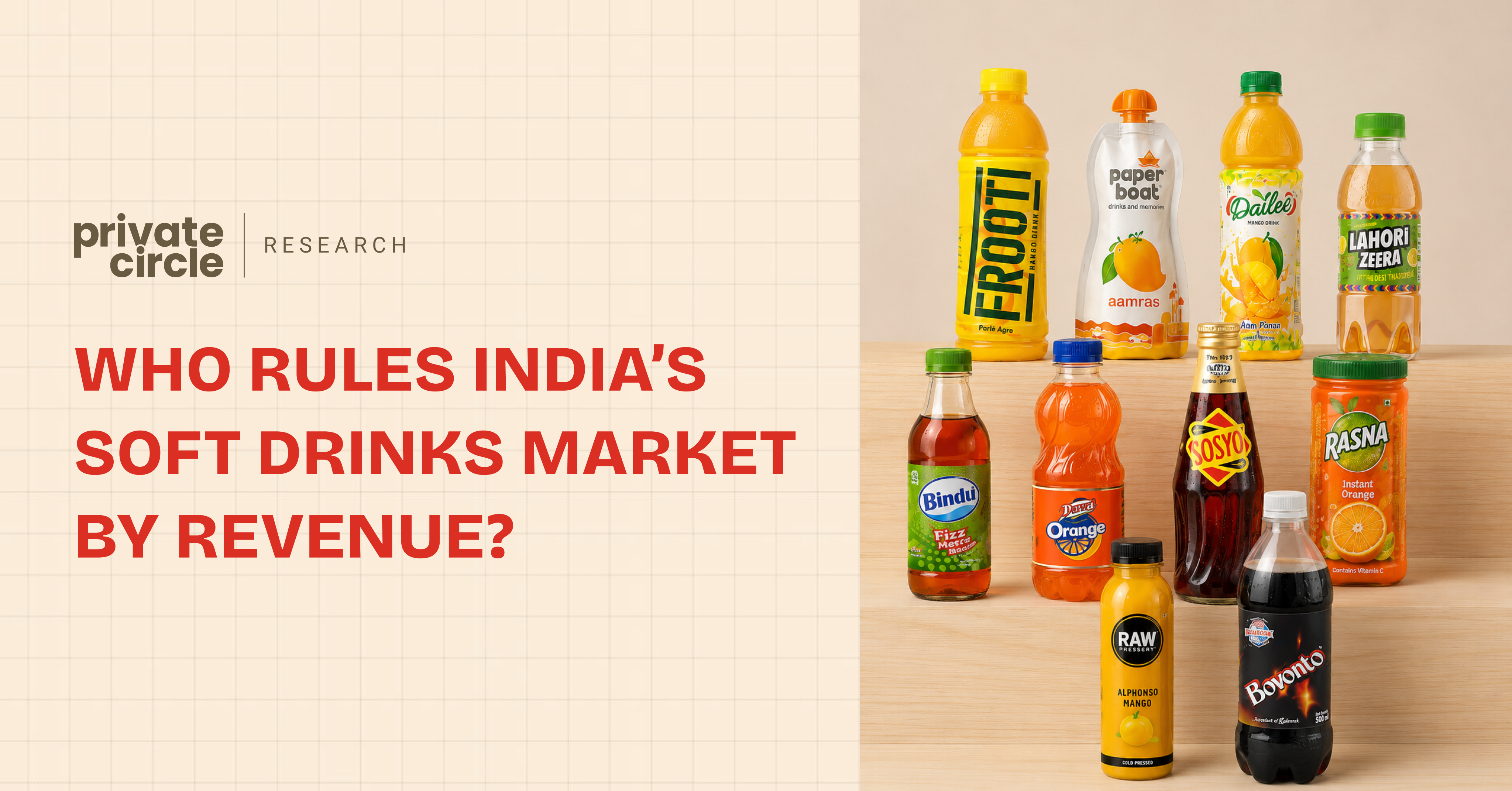
India’s non-alcoholic beverage industry is far bigger than just global cola giants. While multinational brands dominate shelves and advertising, a parallel ecosystem of Indian beverage companies has quietly built strong regional loyalty, extensive distribution networks, and multi-crore businesses. From nostalgic mango drinks and masala sodas to jeera beverages and cold-pressed juices, homegrown players continue to carve out their own space in one of the world’s fastest-growing beverage markets.
Over the years, consumer preferences have undergone significant evolution. Today’s Indian beverage market is no longer limited to carbonated soft drinks alone. Instead, it encompasses a range of products, including fruit-based beverages, ethnic drinks, flavored sodas, health-oriented juices, hydration products, dairy-based drinks, and premium functional beverages. Consequently, several Indian companies have emerged with differentiated positioning, local flavor innovation, and strong regional dominance.
At the same time, rising disposable incomes, changing consumption habits, rapid urbanization, and increased retail penetration have accelerated growth across the sector. Moreover, the summer-driven demand cycle in India continues to make beverages one of the most scalable FMCG categories in the country.
Against this backdrop, a group of unlisted Indian beverage companies has managed to build highly recognizable brands while generating substantial revenues. These companies operate independently of Coca-Cola and PepsiCo ecosystems and have successfully established their own distribution and consumer base.
India’s Leading Homegrown Soft Drink & Beverage Companies
The table below highlights some of the largest unlisted Indian beverage companies based on the latest available revenue filings.
| Company Name | Major Brands | Revenue (₹ Cr) |
| Parle Agro Private Limited | Frooti, Appy, Appy Fizz, Bailley, Smoodh, Frio, B Fizz, Dhishoom | 3370.14 |
| Hector Beverages Private Limited | Paper Boat, Paper Boat Swing, Paper Boat Sparkling, Paper Boat Coconut Water | 682.45 |
| Daily Fresh Fruits India Private Limited | Dailee juices & drinks, Dailee Masala Soda, Agnee Energy, Paalman | 590.96 |
| Archian Foods Private Limited | Lahori Zeera, Lahori Nimboo, Lahori Shikanji, Lahori Kacha Aam | 542.71 |
| Megha Fruit Processing Private Limited | Bindu Jeera, Bindu Fizz Jeera Masala, Bindu Soda, Bindu Lemon, Bindu Orange, Bindu Power, Bindu Energy, Bindu Water | 462.51 |
| Davat Beverages Limited | Davat soft drinks | 361.67 |
| Sosyo Hajoori Beverages Private Limited | Sosyo, Kashmira, Lemee, Opener, Runner, Ginlim, Hajoori Soda | 240.46 |
| Rasna Private Limited | Rasna, Rasna Buzz, Rasna JuiceUp, Juc-C Up | 161.75 |
| Raw Pressery Private Limited | RAW Pressery juices, RAW Coconut Water, RAW Protein Milkshake, RAW Cold Coffee | 154.24 |
| Kali Aerated Water Works Private Limited | Bovonto, Trio, Solo, Kali Mark beverages | 134.45 |
Note: Excludes Coca-Cola/PepsiCo entities, franchise bottlers, and energy drink-focused companies. Covers FY2025 revenue data for the above unlisted companies, while FY2024 has been considered for Dailee, Bindu, and Rasna based on the latest MCA filings.
Parle Agro: The Undisputed Leader Among Indian Beverage Players
When discussing Indian beverage brands, Parle Agro remains impossible to ignore. The company has transformed itself from a mango drink pioneer into a diversified beverage powerhouse with brands spanning juices, flavored drinks, packaged water, dairy beverages, and sparkling products.
Frooti, in particular, remains one of the most iconic mango drink brands in India. Meanwhile, Appy Fizz created a completely new category by positioning itself as a sparkling fruit drink rather than a traditional soft drink. This differentiated branding strategy allowed the company to build a premium image while appealing to younger consumers.
Additionally, Parle Agro’s aggressive distribution expansion and rural penetration have strengthened its nationwide presence. Unlike several regional beverage brands, the company operates at a truly national scale. As a result, its revenue significantly surpasses peers in the unlisted beverage ecosystem.
Furthermore, diversification into products like Bailley packaged water and Smoodh dairy beverages has enabled the company to reduce dependence on seasonal demand patterns.
Regional Beverage Champions Continue to Thrive
Although national players dominate headlines, regional beverage companies continue to demonstrate the power of localized branding and consumer familiarity.
For instance, Lahori Zeera has built a strong identity around traditional Indian flavors. Instead of competing directly with cola beverages, the brand leaned into nostalgia and desi taste profiles. Consequently, it created a differentiated consumer base that values spice-based refreshments over standard carbonated drinks.
Similarly, Bindu has maintained a strong presence across South India through its jeera beverages and flavored sodas. The company’s extensive portfolio allows it to cater to multiple price points and consumer preferences.
In Tamil Nadu, Kali Mark’s Bovonto remains a cult regional beverage brand. Despite competition from global giants, the brand has sustained consumer loyalty for decades. This demonstrates how deeply regional beverage preferences remain embedded within Indian consumption patterns.
At the same time, Sosyo Hajoori Beverages continues to enjoy strong recognition in Gujarat and neighboring markets. Its legacy portfolio and regional brand recall have helped it retain relevance despite evolving consumer trends.
The Rise of Health-Focused and Premium Beverage Brands
Consumer behavior within India’s beverage industry has shifted noticeably over the past decade. Increasingly, urban consumers are seeking healthier alternatives, functional beverages, and preservative-free products.
This trend has benefited companies such as RAW Pressery and Hector Beverages.
RAW Pressery positioned itself around cold-pressed juices, coconut water, protein beverages, and clean-label products. Unlike conventional sugary beverages, the company targeted health-conscious consumers willing to pay premium prices for perceived nutritional value.
Likewise, Hector Beverages successfully differentiated Paper Boat through nostalgia-led storytelling and ethnic Indian drinks. Instead of directly entering the cola market, Paper Boat revived traditional Indian flavors such as aam panna, jaljeera, and kokum.
Moreover, the company’s branding strategy played a crucial role in its success. Through emotional marketing and premium packaging, Paper Boat created a strong urban consumer connection.
Consequently, both companies helped expand India’s premium beverage segment beyond traditional soft drinks.
Why Indian Beverage Brands Continue to Grow
Several structural factors continue to support the growth of Indian beverage companies.
1. Expanding Consumption Base
India’s beverage consumption per capita remains significantly lower than in developed markets. Therefore, long-term growth potential remains substantial.
2. Climate-Driven Demand
Given India’s prolonged summer season, beverages naturally benefit from recurring seasonal demand spikes. Heatwaves and rising temperatures further strengthen consumption trends.
3. Rural Penetration
Many Indian beverage companies are increasingly targeting semi-urban and rural markets. Affordable pricing, small SKUs, and local distribution networks are enabling deeper market penetration.
4. Localized Flavor Preferences
Unlike global standardized beverages, Indian brands often focus on regional taste preferences. Jeera drinks, masala sodas, mango beverages, and traditional Indian flavors continue to attract loyal consumers.
5. Retail & Quick Commerce Expansion
The rise of organized retail, e-commerce, and quick-commerce platforms has significantly improved accessibility for emerging beverage brands. Consumers can now discover and purchase regional brands far more easily than before.
Challenges Facing Indian Beverage Companies
Despite strong growth opportunities, the sector also faces several operational and competitive challenges.
First, raw material inflation remains a major concern. Packaging costs, fruit pulp prices, sugar prices, and logistics expenses directly impact margins.
Second, distribution remains highly capital-intensive. Building cold-chain infrastructure, dealer networks, and retail visibility requires substantial investment.
Third, multinational competition continues to intensify. Global players possess massive advertising budgets and established supply chains that smaller companies often struggle to match.
Additionally, changing consumer preferences require constant innovation. Beverage companies must continuously launch new flavors, healthier alternatives, and premium variants to remain relevant.
Nevertheless, many Indian beverage brands continue to thrive by leveraging regional loyalty, product differentiation, and deep market understanding.
The Future of India’s Beverage Industry
Looking ahead, India’s beverage industry is expected to witness continued diversification. Functional beverages, low-sugar products, ethnic drinks, hydration beverages, and premium juices are likely to gain further traction.
At the same time, regional brands may increasingly scale nationally through digital distribution and modern trade channels. Several companies are also expected to expand internationally, particularly within the Indian diaspora markets.
Moreover, younger consumers are becoming more experimental with flavors and beverage formats. This creates opportunities for innovation-driven companies that can adapt quickly to evolving trends.
Importantly, Indian beverage brands no longer compete solely on affordability. Increasingly, they are building lifestyle positioning, premium appeal, and health-oriented portfolios.
As a result, the competitive landscape is becoming far more dynamic than the traditional cola-dominated market of previous decades.
Conclusion
India’s homegrown beverage ecosystem has evolved into a highly competitive and diverse industry driven by regional innovation, changing consumer preferences, and strong distribution networks. From legacy brands like Frooti and Bovonto to modern health-focused players like RAW Pressery and Paper Boat, Indian beverage companies continue to expand their footprint across categories and geographies.
While multinational giants still dominate the broader carbonated beverage market, these unlisted Indian companies demonstrate that localized branding, product innovation, and cultural relevance remain powerful competitive advantages.
As beverage consumption continues to rise across India, the sector is likely to witness even greater innovation, consolidation, and premiumization in the coming years.
PrivateCircle tracks India’s unlisted companies, startups, financials, funding activity, and sector insights to help businesses, investors, and professionals discover deeper private market intelligence.